


"Investment is an exercise of character; it demands moral clarity and unwavering principles to anchor enduring success."
A.J. Gentry, Principal & Managing Director
Trasinda, a private family investment house that cultivates long-horizon capital leverage.
We couple disciplined allocations in fortress companies with exceptional legacy-defining irreplaceable alternative investment assets.
"Billionaire Patterns"
The Trasinda Codices (Unvarnished)
Strategic DNA of successful billionaires, distilled directly over two nights from A.J. Gentry's reflections of five decades of personal interaction for the definitive Level 5 leader."
Generational Stewards, Not Investors
Our sovereign tenets; we don't own investments, we preserve them for future generations.
This house rejects the sterile, mass-produced imagery of corporate marketing. We find no purpose in the artifice of the seminar stage or performance of shaking hands in crowds. Instead, our identity is forged in centuries of stature, disciplined bearing and stewardship of irreplaceable assets.
Like the stillness of a wine cellar or the character of an aromatic cigar enclave, our reputation is built not on words, but on the quiet weight of our actions and the permanence of our holdings.
Our portfolio is anchored across critical sectors to secure market-essential infrastructure. Equities and Industrials target high-conviction stakes in dominant companies and large-scale services that underpin global supply chains and economic stability. This real-world impact is mirrored in Real Estate allocations, which focus on master-planned communities that transform land into essential footprints of living value.
Equities
Industrials
Real Estate
Capital
Credit
Assets
Supporting these foundations is a disciplined focus on fortress resilience and infinite legacy preservation. Capital allocation prioritizes ventures with systemic influence for enduring growth, while Credit serves as a strategic lever to navigate market complexities with agility. Finally, decoupled from public volatility, rare collectible Assets preserve history and master artisanship as irreplaceable stores of value.
Core
Tenets


A Museum Grade Thomas Brigg & Sons walking stick.
A one-of-one artifact gifted by Norman Child Graham to Herbert Rose Barraud in London, October 1896.

Legacy
"We buy the things the world needs to function
so that we can own the things the world can never replace."
From 1815, renowned apple brandy was distilled and sold from family orchards in Orange, Albemarle, and Nelson counties. Accounts speak of barrels meticulously aged for decades—cellared through the American Civil War before being drawn off.
Grand Charente cognac became our benchmark for refinement, leading to the curation of an estimated 37-bottle reserve.
After 1835, focus shifted to the expansion of James River Basin tobacco growth, river transportation, and mercantile hubs.
By 1860, building on our mastery of the leaf, we partnered with the Dodd family of Beech Grove, Nelson County, expanding our tobacco production in Virginia and across North Carolina while establishing milling operations and foundational agriculture.
Operating at the intersection of Havana’s elite Vegas Finas de Primera in the Pinar del Río, the families who migrated to Florida to pioneer cigar production, and New York backed merchant banking, we facilitated the warehousing of Tabaco Negro Cubano and from 1885, supported the distribution of Clear Havanas and the import of Cuban Habanos, the global currency of status.
In the 1890s, family sawmill operations provided the railroad ties for the construction of the Nelson & Albemarle Railroad.
With the federal land acts of the 1930s, land exhausted from heavy tobacco cultivation was transitioned to apples and corn.
During the 1930s, our family property, near the historic soapstone quarries of Nelson County, Virginia, lay just yards from the childhood home of Earl Hamner Jr., creator of The Waltons. It offered a front-row seat to a vanishing era of American rural life.
Then came the fall of 1960—a period marked by the cool snap of a new decade and a definitive final closing of dusty Cuban tobacco ledgers. Following those pivotal events, the family strategy shifted to curating sovereign, peerless, historically venerable assets—which catalyzed a legacy of discerning acquisitions in heritage artifacts, pipage, horology, spirits and numismatics.
The Seed
From a 1938–1961 Jefferson Nickel folder received on Christmas Day, 1963, sprang world-class collections that since developed and evolved traversing six decades into Trasinda. What began as a childhood fascination was, in truth, an inherited instinct—awakened by a family collection of nearly a hundred Patent Era Dunhill pipes. It was the culmination of a ten-generation lineage unwaveringly devoted to a reverence for the historically profound—a legacy that has matured into an investment philosophy of market-making, centered squarely on securing the permanent and peerless. These sovereign, fixed-supply legacies represent absolute asset insulation—immune to inflation and decoupled from public market volatility.

The Trasinda Reserve: Exemplary 1858, 1800 & 1811 pre-Phylloxera Cognacs. Family curated since the 19th century as stores of investment value.

Capt. Reuben Estes Gentry (b. 1785 Charlottesville, Albemarle County, Virginia): Letter to his brothers, 1840.

Foundational Footprint: Family agrarian, warehousing, and merchant services, circa 1928—spanning from Delaware into Indiana, Texas, and Florida and extending to Cuba and Great Britain.


Resting in the land that shaped our lineage: centuries of family interred in Nelson County, Virginia.
From the moment we arrived in Virginia in 1676 from England, our provenance was defined by multi-generational tobacco farming, land speculation, and strategic estate building. The family methodically consolidated vast, fertile tracts of land by anticipating the colony’s inevitable westward progression.
By the early 1700s, our family played a pivotal role in developing state-mandated inspection, grading, and export warehouses for tobacco. By 1765, we had expanded inland from New Kent into the counties of Hanover, Louisa, Albemarle and Amherst, Virginia as well as the North Carolina Piedmont, establishing large dark leaf tobacco tracts throughout the Upper James River region.
Tobacco was packed in hogshead barrels and moved on bateaux down the James River to the Chesapeake Bay, inspected and then sold by Scottish agents or shipped to British merchant houses.


The $1,000,000 Casino Chip
Loews La Napoule Hotel & Casino — French Riviera
In May 1983, Kirk Kerkorian wagered one million dollars on a single roll of the dice.
Commemorating that remarkable evening, casino owners/brothers Larry and Bob Tisch
presented this historic chip to Jerry Perenchio, an attendee of the event who gifted it to Trasinda.
Those original landmark collections included a 600-bottle cellar of fine wines featuring the legendary 1945–1953 vintages of Château Mouton Rothschild, Château Cheval Blanc and Château Margaux.
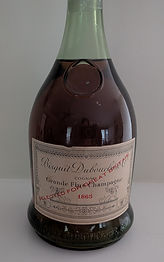
The holdings include the remnants of a venerable family selection of pre-Phylloxera cognacs—a peerless multi-generational gallery of exquisite 1800, 1811, 1847, 1858, and 1865 grand cask reserves—complemented by three-decade-matured Japanese spirits of the Yamazaki and Hibiki brands from Suntory's legendary distilleries and the 1976 vintage from the ghost, Highland distillery, Brora.
Today's appreciation of artisanal mastery in fine cigars and cognac is no mere leisure; it is forged through a lifetime of experiencing many distinct vintages of rare 19th-century grand cask reserves and consuming mid-1950s Habanos exclusively for several decades.

1285 - 1314 Knights Templar Gros Tournois
1400 - 1499 France, Jeton de Tournai


2020 Topps Turkey Red Chrome #TRC-71
Ty Cobb Gold Superfractor 1/1
Graded 9.5 Gem Mint

Circa 1880 Carte de Visite - J.W. Price Studio Derby
Fred Spofforth "The Demon Bowler"
Exceptionally Rare & Historically Significant Artifact

2021 Topps Finest Legacies #FL-MC
Cobb / Cabrera Gold Superfractor 1/1
Graded 9.5 Gem Mint
By 1962, the family still held a 109-box domestic reserve of 1952–1958 Cuban Habanos, which we ultimately chose to consume. The humidor held more than 2,700 Habanos and Dunhill's My Mixture, their aroma a mesmerizing, rich, and intoxicating scent.
For three decades until 1992 it was an exercise of unwavering restraint to stand enveloped in the bouquet of a humidor laden with such Investment-Grade masterworks and choose preservation over fleeting temptation and the swift flare of the match.
The Bespoke Standard
The holdings then expanded into one of the world's premier vintage guitar collections—comprising 439 pieces, including rare exemplars—and an archive of over 1,800 distinct casino chips and historic Las Vegas dice, many of which are now preserved in the Museum of Gaming History. This development was further anchored by a vast assembly of foreign and U.S. currency, rare Don Bradman cricket memorabilia, and a massive baseball card compilation, including nearly 250 one-of-one issues—along with perhaps the finest modern-day Ty Cobb collection—as well as iconic rookie cards of Honus Wagner and Mickey Mantle. These collections were the primary capital foundation, "The Pillar," and alternative asset axiom for Trasinda.
The Pillar
While these unique alternative assets remain an integral albeit finite part of the portfolio, Trasinda fixes its vision on the future, prioritizing yield-producing long-term sustainability and irreplaceable assets over short-term market trends. For corporate investments, the focus rests strictly on economic anchors and dominant, capital-intensive market positions that are prohibitive to challenge—establishing a bridge that captures yield from the vital infrastructure of modern commerce and everyday life.
The Shield
Trasinda systematically rejects institutional over-diversification, maintaining a strictly concentrated mandate of 12 to 15 high-conviction positions. Capital is primarily anchored within deep, systemic large-company fund structures, allowing us to capture the raw economic power of foundational global commerce while neutralizing localized corporate risk. This disciplined architecture ensures that the house’s core reserves are backed exclusively by self-sustaining commercial giants, transforming baseline equity allocation into an active mechanism for long-term wealth preservation.
The Infinite Horizon
The private family investment design of Trasinda is built upon an infinite horizon—a vision achieved by anchoring to the absolute strength of fortress-tier liquidity, transforming capital from a source of cyclical market anxiety into a strategic shield. The final stage of the process is long-term holding to achieve "alpha" returns. By investing in exclusive or essential assets, the core philosophy of Trasinda evolves from being a "market taker" (someone reacting to prevailing prices) to a "market maker".
By acquiring irreplaceable assets—from a one-of-one baseball card, historical artifact, or rare 19th-century spirit to essential infrastructure—Trasinda eliminates the element of competition; this provides the leverage required to dictate terms and value.
This is the cornerstone of achieving consistent, market-leading alpha—turning rarity into a definitive economic advantage.
1865 Bisquit Dubouche
Grande Fine Champagne Cognac
Thomas Brigg & Sons Walking Stick: Formerly owned by Sir John Barker of Barkers of Kensington, London.
2014 First Edition Davidoff Oro Blanco: Curated, irreplaceable assets of the Trasinda portfolio.
"Wealth is not the mere accumulation of assets, but the preservation of the autonomy to act with integrity when markets succumb to unpredictable volatility or stark chaos. True alpha is realized when character meets capital."


1949-1950 Fender Broadcaster
1934 Martin D-28 w Herringbone Inlay
1934 Martin D-28 The definitive "Holy Grail" of the guitar world—an irreplaceable store of value and a premier, fixed-supply legacy asset epitomizing the peerless apex of pre-war craftsmanship.
1949-1950 Fender Broadcaster Factory Prototype A peerless pillar of industrial design and musical history; the singular prototype that anchored the evolution of the solid-body electric guitar.
"Risk management is the bedrock upon which our permanence is anchored."
Elevated liquidity is not a defensive posture; it is the quiet, patient reserve that allows one to act when others are forced to react.
Investment need not be corporately sterile; there is profound value in artistic design and historical provenance.
Q4 2026
October

June 30, 1930 2nd Test "Lord’s Ground"
England vs Australia Scorecard
Sir Don Bradman's Perfect Match

August 14, 1948 5th Test, "The Oval"
The World Famous "Duck" Score
Sir Don Bradman's Final Scorecard
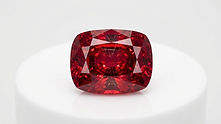
This heirloom 10.25-carat Burmese natural ruby represents the absolute pinnacle of gemstone scarcity, combining exceptional clarity and color.
"Pigeon's Blood" red; the romantic grandeur of the Belle Époque.

The Chesterfield Sitting Room
Trasinda

Contact
Trasinda
Direct Correspondence for the Principal

BACK TO TOP